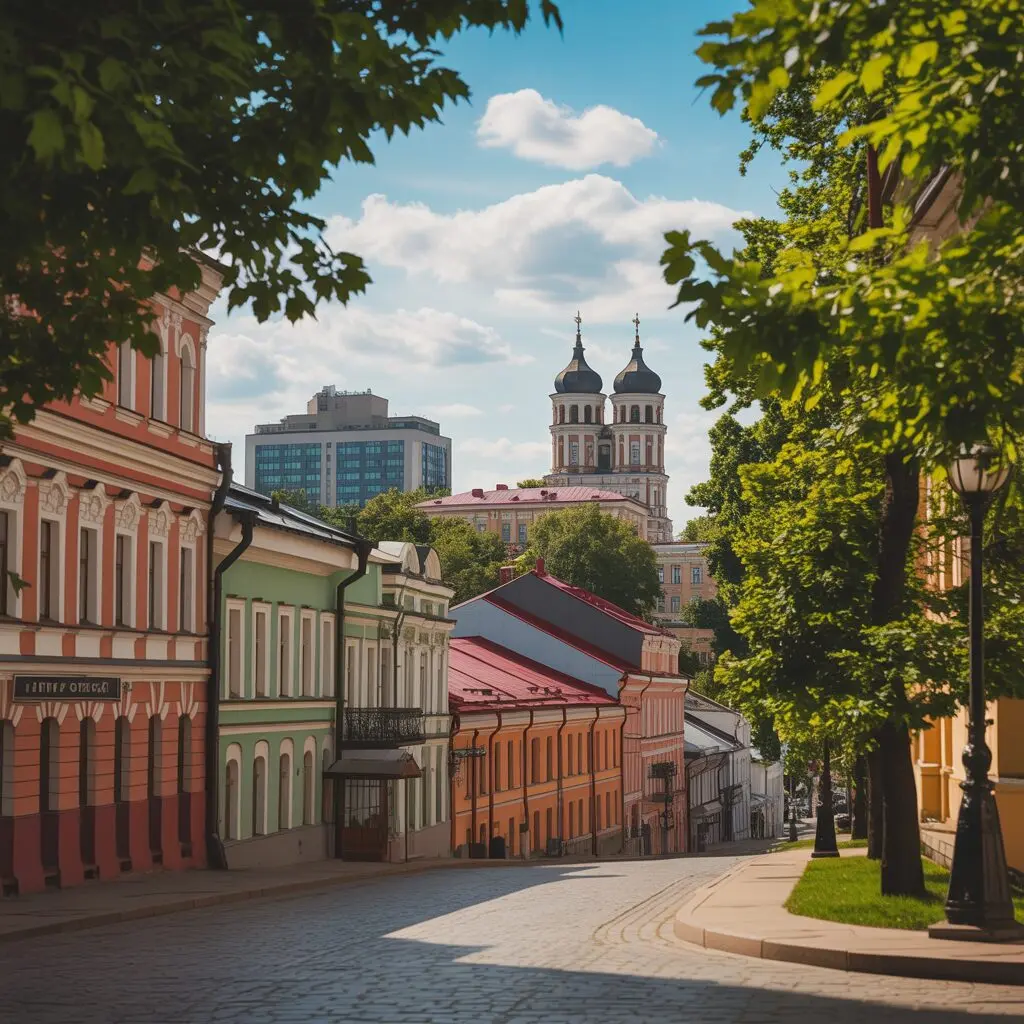
Belarus is a hidden gem in Eastern Europe offering rich history, beautiful landscapes, and warm hospitality. With your eVisa Belarus approved, you can explore cities like Minsk, Brest, and Grodno while enjoying affordable prices and authentic cultural experiences. This travel guide covers everything you need to know for your trip.
Getting to Belarus
With your eVisa Belarus in hand, the next step is planning your journey to the country. Belarus is accessible by air, rail, and road from neighboring countries.
By Air:
Minsk National Airport (MSQ) is the main international gateway, located about 40 kilometers east of the capital city. The airport receives flights from major European and Asian cities.
- Direct flights from: Istanbul, Moscow, Dubai, Warsaw, Berlin, Vienna, Riga, Vilnius, Beijing
- Airlines: Belavia (Belarusian national carrier), Turkish Airlines, LOT, Aeroflot, and others
- Airport to city: Bus 300Э (45 minutes, ~3 EUR) or taxi (~15-25 EUR)
By Train:
International trains connect Minsk with Moscow (9 hours), Warsaw (10 hours), Vilnius (3 hours), and other cities. The Minsk Passazhirsky central station is located in the city center, making train arrival very convenient.
By Road:
You can enter Belarus by car or bus through border crossings with Poland (Brest), Lithuania (Grodno, Lida), Latvia, Russia, and Ukraine. Your printed eVisa Belarus must be presented at the border checkpoint along with your passport.
Minsk: The Capital City
Minsk is the vibrant capital of Belarus and the main destination for most travelers with an eVisa Belarus. The city blends Soviet-era architecture with modern developments, offering a unique urban experience.
Top Attractions in Minsk:
- Independence Avenue (Prospekt Nezavisimosti): The main boulevard stretching 15 km through the city center, featuring Stalinist architecture, shops, and cafes
- Independence Square: One of the largest squares in Europe, home to the Government House and Church of Saints Simon and Helena
- Old Town (Troitskoye Predmestye): Historic district along the Svisloch River with colorful buildings, restaurants, and museums
- National Library of Belarus: A striking diamond-shaped building with an observation deck offering panoramic city views
- Victory Square: Central square with the iconic Victory Monument commemorating World War II
- Great Patriotic War Museum: Comprehensive museum about Belarus during World War II
- Upper Town (Verkhny Gorod): Historic center with the Town Hall, Cathedral of the Holy Spirit, and Jesuit College
Minsk has an efficient metro system with 2 lines covering major attractions and residential areas. A single ride costs approximately 0.30 EUR, making it one of the most affordable metro systems in Europe.
Beyond Minsk: Regional Destinations
While Minsk is the main draw for travelers with an eVisa Belarus, the country has much more to offer beyond the capital.
Brest:
Located on the border with Poland, Brest is known for the Brest Hero-Fortress, a massive memorial complex commemorating the Soviet defense in 1941. The city also features charming pedestrian streets and a growing cafe culture. Brest is a popular entry point for travelers entering Belarus from Poland.
Grodno:
One of the most beautiful cities in Belarus, Grodno features well-preserved Old Town architecture, the impressive Kalozha Church (12th century), and the Royal Palace. The city is located near the Lithuanian and Polish borders, making it a convenient stop for regional travel.
Nesvizh and Mir:
Two UNESCO World Heritage Sites located about 100 km from Minsk. The Nesvizh Palace complex and Mir Castle are among the most visited attractions in Belarus, showcasing stunning Renaissance and Baroque architecture.
Białowieża Forest:
A UNESCO World Heritage Site shared with Poland, this ancient forest is home to the European bison, the continent’s heaviest land animal. The Belarusian side offers guided tours, hiking trails, and a museum of nature.
Vitebsk:
Known as the cultural capital of Belarus and the birthplace of Marc Chagall. The city hosts the annual Slavianski Bazaar music festival in July, attracting performers and visitors from across Eastern Europe.
Accommodation in Belarus
Finding accommodation in Belarus is straightforward, with options ranging from budget hostels to luxury hotels.
Accommodation Types:
| Type | Price Range (per night) | Best For |
|---|---|---|
| Hostels | 8-15 EUR | Budget travelers, solo backpackers |
| Guesthouses | 15-30 EUR | Couples, local experience |
| 3-star hotels | 30-60 EUR | Comfort, business travelers |
| 4-star hotels | 60-120 EUR | Comfort, families |
| 5-star hotels | 120-250 EUR | Luxury, special occasions |
Booking Tips:
- Book through international platforms (Booking.com, Airbnb) or local Belarusian sites
- Hotels in Minsk city center are more expensive but offer better access to attractions
- Many hotels include breakfast in the room rate
- Apartment rentals offer more space and kitchen facilities for longer stays
- During peak season (June-August), book at least 2-4 weeks in advance
When applying for your eVisa Belarus, you need to provide accommodation details, so booking in advance is both a requirement and a practical necessity.
Belarusian Cuisine
Belarusian cuisine is hearty, flavorful, and rooted in traditional Eastern European cooking. Exploring local food is one of the highlights of visiting Belarus with your eVisa Belarus.
Traditional Dishes to Try:
- Draniki: Crispy potato pancakes served with sour cream – the national dish of Belarus
- Machanka: A rich pork stew served with thick pancakes (bliny)
- Kolduny: Stuffed potato dumplings filled with meat
- Borscht: Beetroot soup, a regional classic
- Kletski: Potato dumplings similar to gnocchi
- Salo: Cured pork fat, often served as an appetizer
- Kvass: Traditional fermented bread drink
Dining Options:
- Cafeterias (Stolovaya): Budget-friendly, authentic Belarusian meals for 3-5 EUR
- Local restaurants: Mid-range dining with traditional and international menus, 10-20 EUR per person
- Fine dining: Upscale restaurants in Minsk, 30-50 EUR per person
- Street food: Quick bites available at markets and food stalls, 2-5 EUR
- Cafes: Coffee culture is growing in Minsk, with many modern cafes offering excellent coffee and pastries
Currency and Money
The Belarusian ruble (BYN) is the local currency. Understanding the money situation is important for travelers with an eVisa Belarus.
Currency Tips:
- Exchange: Exchange EUR or USD at banks and official exchange offices for the best rates
- ATMs: Widely available in Minsk and other cities, dispensing Belarusian rubles
- Credit cards: Visa and Mastercard accepted at hotels, restaurants, and larger shops
- Cash: Carry some cash for small purchases, markets, and rural areas
- Tipping: Not mandatory but 5-10% is appreciated in restaurants
As of 2026, the approximate exchange rate is 1 EUR = 3.5 BYN and 1 USD = 3.2 BYN. Always check current rates before your trip, as they fluctuate.
Weather and Best Time to Visit
Belarus has a continental climate with distinct seasons. The best time to visit depends on your preferences and planned activities.
Seasonal Overview:
| Season | Temperature | Conditions | Best For |
|---|---|---|---|
| Spring (Mar-May) | 5-18°C | Mild, occasional rain | Nature, fewer crowds |
| Summer (Jun-Aug) | 18-28°C | Warm, long days | Tourism, festivals |
| Autumn (Sep-Nov) | 5-15°C | Cool, colorful foliage | Photography, walks |
| Winter (Dec-Feb) | -5 to -15°C | Cold, snow | Winter sports, Christmas |
The most popular time to visit Belarus with an eVisa Belarus is from May to September, when the weather is pleasant and outdoor attractions are fully accessible. Summer is ideal for exploring cities, countryside, and national parks.
Language and Communication
Belarus has two official languages: Belarusian and Russian. Russian is the dominant language in daily life, while Belarusian is used in education, media, and official contexts.
Language Tips:
- English is spoken in tourist areas, international hotels, and upscale restaurants
- Learning basic Russian phrases greatly enhances your travel experience
- Translation apps are helpful for navigating menus and signs
- Most young people in Minsk speak some English
- In rural areas, English proficiency is limited – Russian is essential
Useful Russian Phrases:
- Hello: Privet (informal) / Zdravstvuyte (formal)
- Thank you: Spasibo
- Yes/No: Da / Net
- How much?: Skolko stoit?
- Where is?: Gde…?
- Please: Pozhaluysta
- Excuse me: Izvinite
Safety and Practical Tips
Belarus is generally a safe country for tourists. Here are practical tips for travelers with an eVisa Belarus.
Safety:
- Belarus has low crime rates compared to most European countries
- Keep your passport and eVisa printout with you at all times
- Photography of military installations and government buildings is restricted
- Register with your embassy if staying longer than 5 business days
Health:
- No special vaccinations are required for Belarus
- Tap water is safe to drink in Minsk (though bottled water is recommended for sensitive stomachs)
- Pharmacies are widely available in cities
- Emergency number: 103 (ambulance), 102 (police), 101 (fire)
Internet and Connectivity:
- Wi-Fi is available in most hotels, cafes, and restaurants
- Local SIM cards are available from providers like MTS, A1, and life:)
- 4G coverage is good in cities and along main highways
- VPN services may be useful for accessing certain websites
For complete visa information, visit our Belarus eVisa guide. For visa types, see our visa types overview.
Last updated: July 2026. Practical information based on current travel conditions in Belarus.